
Bacon Nutrition Facts: Calories, Macros & Health Benefits
Summary: 100g of bacon contains 541 calories, 37g protein, 1.4g carbs, and 42g fat. Bacon is a good source of sodium.
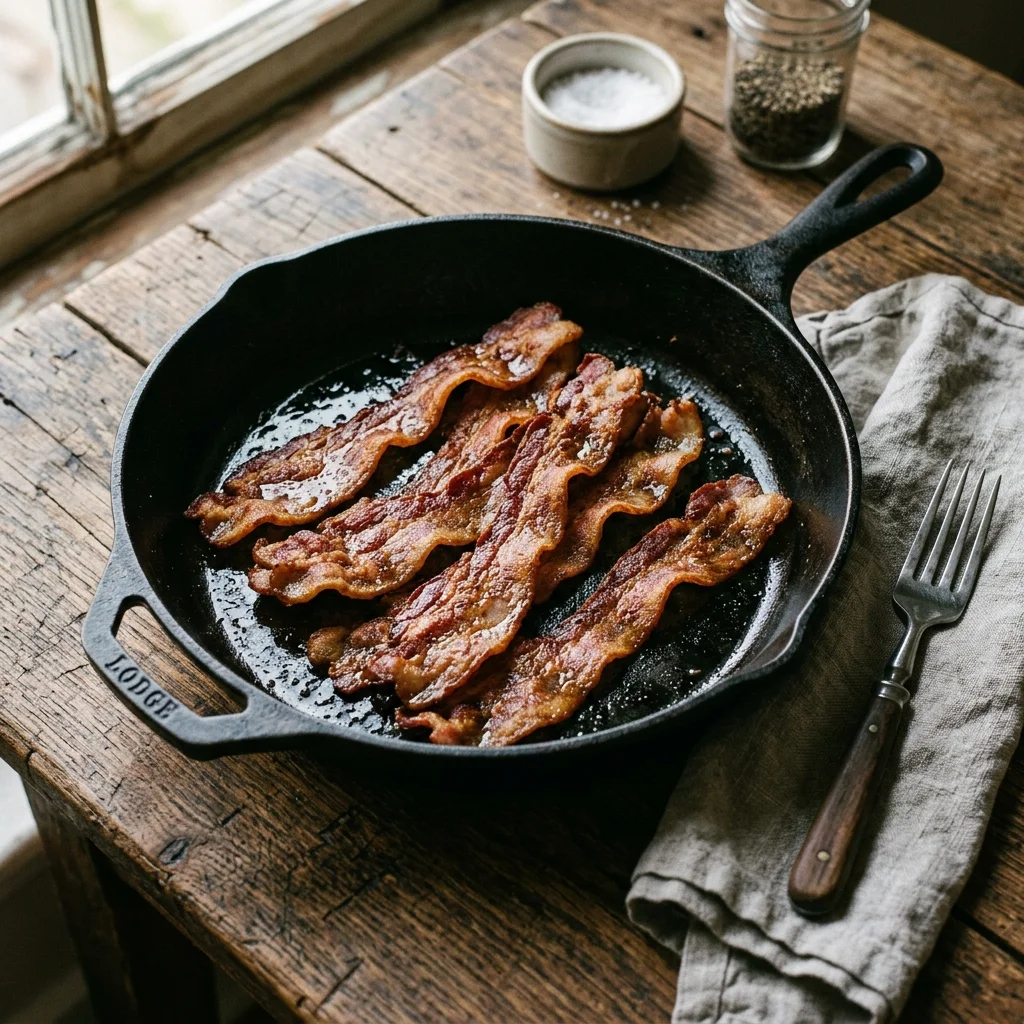
Nutrition Facts — per 100g
| Nutrient | Amount | % Daily Value |
|---|---|---|
| Calories | 541 kcal | 27% |
| Protein | 37.0g | 74% |
| Carbohydrates | 1.4g | 1% |
| Total Fat | 42.0g | 54% |
| Sodium | 1717.0mg | 75% |
Is Bacon Good for You?
Bacon is a protein-rich food that provides 37g of protein per 100g (74% Daily Value), making it excellent for muscle maintenance and satiety. However, it is high in sodium at 1717mg per 100g (75% Daily Value) and contains 42g of total fat, so moderation is important for those monitoring sodium or calorie intake.
Key Health Benefits of Bacon
High in Protein: With 37g of protein per 100g, bacon supports muscle repair, immune function, and helps keep you feeling full longer—making it a valuable protein source for active individuals.
Rich in B Vitamins: Bacon is a strong source of B vitamins, particularly B6 and B12, which play critical roles in energy metabolism and neurological health.
Provides Essential Minerals: It contains important minerals like selenium and phosphorus that support bone health, thyroid function, and cellular energy production.
Low in Carbohydrates: With only 1.4g of carbohydrates per 100g (1% Daily Value), bacon is compatible with low-carb and ketogenic diets.
Calorie-Dense Nutrition: At 541 kcal per 100g, bacon delivers substantial nutrition in a small portion, making it efficient for meeting caloric and protein goals.
How Does Bacon Compare?
Bacon stands out compared to ham or Canadian bacon because it is higher in total fat and calories, delivering more concentrated energy and flavor per serving. While ham typically contains less fat and sodium, bacon’s higher fat content makes it particularly satiating and rich in fat-soluble nutrients.
Frequently Asked Questions
How many calories is in bacon?
Bacon contains 541 calories per 100g, or approximately 43 calories per slice (assuming a slice weighs about 8g). This makes it a calorie-dense food that should be portioned carefully if you’re tracking daily intake.
Is bacon good for weight loss?
Bacon can support weight loss goals because its high protein content (37g per 100g) promotes satiety and helps preserve muscle mass during calorie restriction. However, moderation is key due to its calorie density—a small serving can fit into a balanced diet plan.
How much sodium does bacon contain?
Bacon contains 1717mg of sodium per 100g, which represents 75% of the Daily Value in just one serving. This high sodium content means bacon should be consumed in moderation, especially for individuals managing blood pressure or following a low-sodium diet.
Is bacon keto-friendly?
Yes, bacon is highly keto-friendly because it is very low in carbohydrates (only 1.4g per 100g) while being rich in protein and fat—the macronutrient foundation of ketogenic diets.
How should bacon be stored to maintain freshness?
Cooked bacon should be stored in an airtight container in the refrigerator for up to 5 days, while uncooked bacon keeps for about a week in its original packaging. For longer storage, you can freeze bacon for up to 8 months.
How to Track Bacon Nutrition with Gram
The Gram app makes it simple to log bacon and instantly see its complete nutrient breakdown, including protein, fat, sodium, and calories. Our AI food scanner recognizes bacon whether it’s cooked or raw, so you can just photograph your serving and get accurate nutritional data in seconds. This makes it easy to stay accountable to your daily nutrition goals without manual calculations.
Frequently Asked Questions
How many calories is in bacon?
Bacon contains 541 calories per 100g, or approximately 43 calories per slice (assuming a slice weighs about 8g). This makes it a calorie-dense food that should be portioned carefully if you're tracking daily intake.
Is bacon good for weight loss?
Bacon can support weight loss goals because its high protein content (37g per 100g) promotes satiety and helps preserve muscle mass during calorie restriction. However, moderation is key due to its calorie density—a small serving can fit into a balanced diet plan.
How much sodium does bacon contain?
Bacon contains 1717mg of sodium per 100g, which represents 75% of the Daily Value in just one serving. This high sodium content means bacon should be consumed in moderation, especially for individuals managing blood pressure or following a low-sodium diet.
Is bacon keto-friendly?
Yes, bacon is highly keto-friendly because it is very low in carbohydrates (only 1.4g per 100g) while being rich in protein and fat—the macronutrient foundation of ketogenic diets.
How should bacon be stored to maintain freshness?
Cooked bacon should be stored in an airtight container in the refrigerator for up to 5 days, while uncooked bacon keeps for about a week in its original packaging. For longer storage, you can freeze bacon for up to 8 months.

Track your nutrition with Gram
Snap a photo of your meal and let AI do the rest. Track calories, macros, and micronutrients effortlessly.
Nutrition data sourced from USDA FoodData Central. Track bacon and thousands of other foods with the Gram app.