
Dried Dates Nutrition Facts: Calories, Macros & Health Benefits
Summary: 100g of dried dates contains 282 calories, 2.5g protein, 75g carbs, and 0.4g fat. Dried Dates are a good source of essential vitamins and minerals.
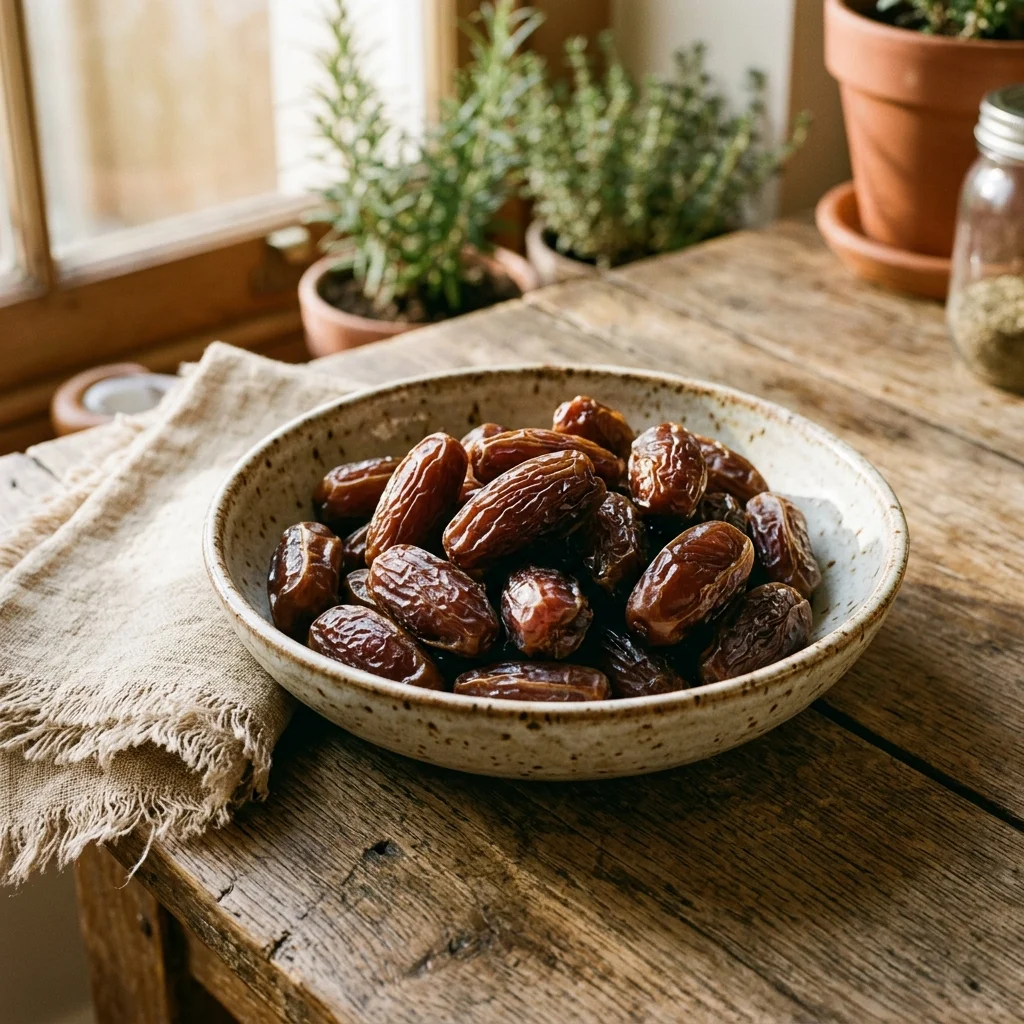
Nutrition Facts — per 100g
| Nutrient | Amount | % Daily Value |
|---|---|---|
| Calories | 282 kcal | 14% |
| Protein | 2.5g | 5% |
| Carbohydrates | 75.0g | 27% |
| Total Fat | 0.40g | 1% |
| Fiber | 8.0g | 29% |
| Sodium | 2.0mg | 0% |
Are Dried Dates Good for You?
Yes, Dried Dates are a nutrient-dense food that can support digestive and overall health. Per 100g, they provide 8g of fiber (29% Daily Value) for digestive support, 75g of carbohydrates (27% Daily Value) for sustained energy, and minimal sodium at just 2mg. They’re also naturally low in fat at 0.4g per serving.
Key Health Benefits of Dried Dates
High in Fiber for Digestive Health — With 8g of fiber per 100g (29% of your daily need), Dried Dates support healthy digestion and may help maintain regular bowel movements. This fiber content also promotes satiety, helping you feel fuller longer.
Excellent Energy Source — Dried Dates contain 75g of carbohydrates per 100g, making them an ideal pre- or post-workout snack or natural sweetener alternative. The carbs provide quick and sustained energy without refined sugars.
Low in Fat and Sodium — At just 0.4g total fat and 2mg sodium per 100g serving, Dried Dates are heart-healthy and suitable for those monitoring sodium intake. They’re naturally low in unhealthy fats while maintaining nutritional density.
Modest Protein Content — While not a primary protein source, Dried Dates do provide 2.5g of protein per 100g (5% Daily Value). This makes them a better option than many other dried fruits for a complete nutrient profile.
How Does Dried Dates Compare?
Dried Dates stand out from other dried fruits like raisins and dried figs due to their exceptional fiber content—8g per 100g compared to raisins’ 3.7g. They’re also lower in calories (282 kcal) than some alternatives, while delivering comparable carbohydrate energy and superior digestive benefits.
Frequently Asked Questions
How many calories are in dried dates?
Dried Dates contain 282 calories per 100g serving. A single medium dried date (about 8g) contains roughly 23 calories, making them a reasonably portioned snack option.
Are dried dates good for weight loss?
Dried Dates can support weight loss due to their 8g of fiber per 100g, which promotes fullness and reduces overall calorie intake. However, portion control is important since they’re calorie-dense at 282 kcal per 100g—a small handful is often sufficient.
Do dried dates have natural sugar?
Yes, the 75g of carbohydrates per 100g in Dried Dates includes naturally occurring sugars (primarily fructose, glucose, and sucrose). While these are natural sugars rather than added sugars, they still contribute to total carbohydrate intake and should be monitored by those managing blood sugar levels.
Are dried dates keto-friendly?
Dried Dates are not recommended for ketogenic diets since they’re high in carbohydrates at 75g per 100g. A single date can contain 5-6g of net carbs, which may quickly exceed daily keto limits.
How should I store dried dates?
Store Dried Dates in an airtight container in a cool, dry place for up to several months, or refrigerate them for extended freshness. You can also freeze them for longer-term storage without losing nutritional value.
How to Track Dried Dates Nutrition with Gram
The Gram app makes logging Dried Dates simple—just scan the package with our AI food scanner or search for them by name to instantly see the complete nutrient breakdown. You’ll track all macronutrients and micronutrients in real-time, helping you stay accountable to your dietary goals without manual calculations.
Frequently Asked Questions
How many calories are in dried dates?
Dried Dates contain 282 calories per 100g serving. A single medium dried date (about 8g) contains roughly 23 calories, making them a reasonably portioned snack option.
Are dried dates good for weight loss?
Dried Dates can support weight loss due to their 8g of fiber per 100g, which promotes fullness and reduces overall calorie intake. However, portion control is important since they're calorie-dense at 282 kcal per 100g—a small handful is often sufficient.
Do dried dates have natural sugar?
Yes, the 75g of carbohydrates per 100g in Dried Dates includes naturally occurring sugars (primarily fructose, glucose, and sucrose). While these are natural sugars rather than added sugars, they still contribute to total carbohydrate intake and should be monitored by those managing blood sugar levels.
Are dried dates keto-friendly?
Dried Dates are not recommended for ketogenic diets since they're high in carbohydrates at 75g per 100g. A single date can contain 5-6g of net carbs, which may quickly exceed daily keto limits.
How should I store dried dates?
Store Dried Dates in an airtight container in a cool, dry place for up to several months, or refrigerate them for extended freshness. You can also freeze them for longer-term storage without losing nutritional value.

Track your nutrition with Gram
Snap a photo of your meal and let AI do the rest. Track calories, macros, and micronutrients effortlessly.
Nutrition data sourced from USDA FoodData Central. Track dried dates and thousands of other foods with the Gram app.