
Granola Nutrition Facts: Calories, Macros & Health Benefits
Summary: 100g of granola contains 471 calories, 10g protein, 64.7g carbs, and 20.8g fat. Granola is a good source of sodium.
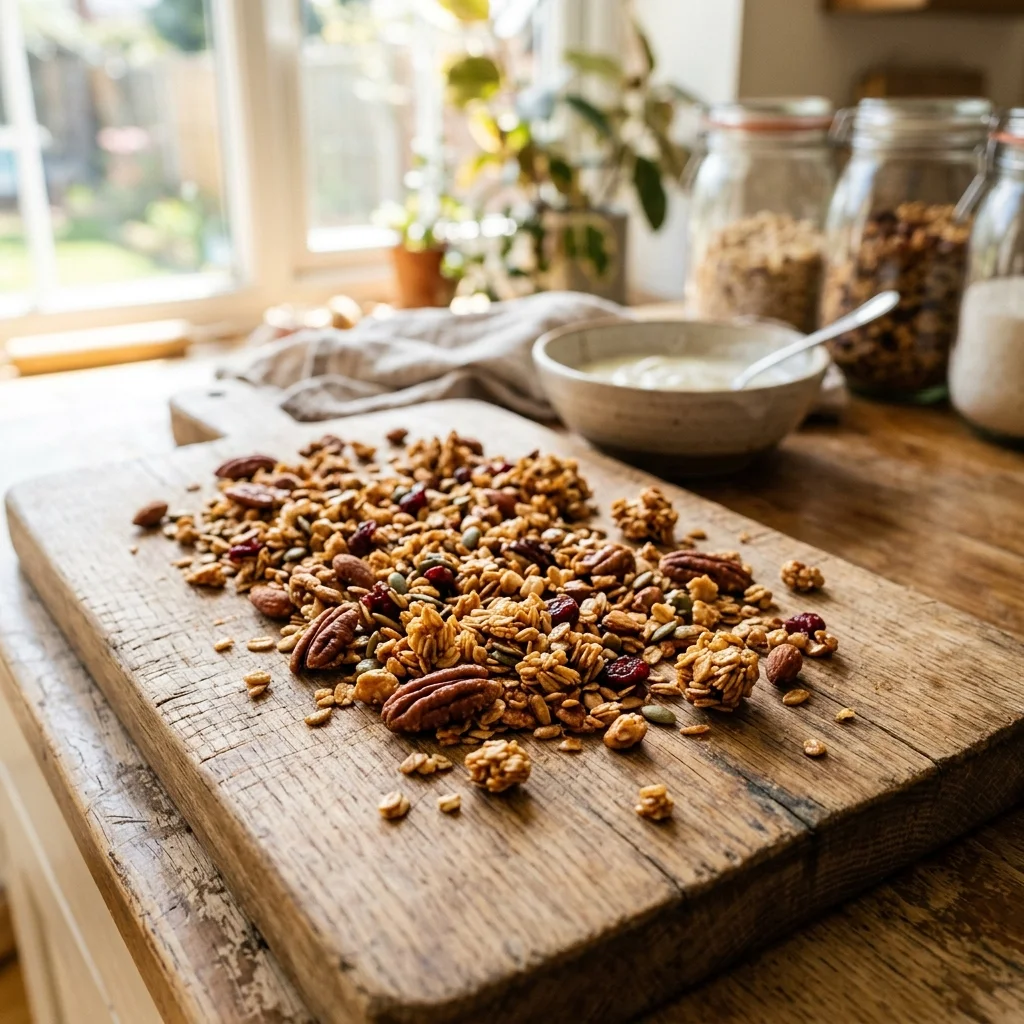
Nutrition Facts — per 100g
| Nutrient | Amount | % Daily Value |
|---|---|---|
| Calories | 471 kcal | 24% |
| Protein | 10.0g | 20% |
| Carbohydrates | 64.7g | 24% |
| Total Fat | 20.8g | 27% |
| Fiber | 8.5g | 30% |
| Sodium | 298.0mg | 13% |
Is Granola Good for You?
Yes, granola can be a nutritious choice when consumed mindfully. Per 100g, it delivers 10g of protein (20% DV), 8.5g of fiber (30% DV), and substantial carbohydrates (64.7g, 24% DV), making it a nutrient-dense food that supports energy and digestive health. However, its calorie density (471 kcal per 100g) and fat content (20.8g, 27% DV) mean portion control matters for weight management.
Key Health Benefits of Granola
High in Fiber for Digestive Health — With 8.5g of fiber per 100g (30% of your daily need), granola supports gut health, promotes regular digestion, and helps maintain stable blood sugar levels throughout the day.
Excellent Protein Source — Delivering 10g of protein per 100g (20% DV), granola helps build and repair muscle tissue, making it a solid choice for post-workout recovery or sustained satiety.
Energy-Dense Fuel — At 471 calories per 100g, granola packs substantial calories in a small volume, making it ideal for active individuals or anyone needing quick, sustained energy between meals.
Rich in Heart-Healthy Fats — The 20.8g of fat per 100g includes beneficial unsaturated fats from nuts and seeds (depending on the formulation), which support cardiovascular health and nutrient absorption.
Moderate Sodium Levels — At 298mg per 100g (13% DV), granola is relatively low in sodium compared to many processed cereals, helping you maintain healthy blood pressure when consumed as part of a balanced diet.
How Does Granola Compare?
Granola outperforms many breakfast cereals in protein and fiber content, offering 10g and 8.5g respectively per 100g. Unlike lighter, more processed cereals that often contain added sugars without nutritional substance, granola’s whole grains, nuts, and seeds create a more complete nutritional profile. This density makes it more satiating, though it does come with higher calories and fat—a trade-off that benefits those seeking sustained energy over rapid digestion.
Frequently Asked Questions
How many calories is in granola?
Granola contains 471 calories per 100g, which equals roughly 118 calories per quarter-cup serving (about 25g). Since granola is calorie-dense, measuring portions carefully helps prevent unintended overconsumption.
Is granola good for weight loss?
Granola can support weight loss when portioned correctly, thanks to its high fiber (8.5g/100g) and protein (10g/100g) content, which both promote satiety. However, its 471 calories per 100g means even small servings add up quickly, so pairing it with Greek yogurt or milk rather than eating it by the handful keeps calories in check.
How much fiber does granola contain?
Granola provides 8.5g of fiber per 100g, which represents 30% of the recommended daily value. This substantial fiber content supports digestive regularity and can help you feel fuller longer.
Is granola keto-friendly?
Granola is generally not suitable for strict ketogenic diets because it contains 64.7g of carbohydrates per 100g, which would quickly exceed the typical 20-50g daily carb limit. Most granola formulations rely on grains and dried fruits, both high in carbs.
How should I store granola to keep it fresh?
Store granola in an airtight container at room temperature, away from direct sunlight and moisture, to maintain its crunch and prevent it from going stale. Properly stored granola typically stays fresh for 2-3 weeks, though homemade varieties may vary depending on ingredients used.
How to Track Granola Nutrition with Gram
The Gram app makes logging granola effortless—simply scan the package barcode or photograph your bowl to instantly see a complete nutrient breakdown including calories, protein, fiber, and fat. Our AI-powered food recognition automatically captures serving sizes, so you can track exactly how your granola intake fits into your daily nutritional goals without manual data entry.
Frequently Asked Questions
How many calories is in granola?
Granola contains 471 calories per 100g, which equals roughly 118 calories per quarter-cup serving (about 25g). Since granola is calorie-dense, measuring portions carefully helps prevent unintended overconsumption.
Is granola good for weight loss?
Granola can support weight loss when portioned correctly, thanks to its high fiber (8.5g/100g) and protein (10g/100g) content, which both promote satiety. However, its 471 calories per 100g means even small servings add up quickly, so pairing it with Greek yogurt or milk rather than eating it by the handful keeps calories in check.
How much fiber does granola contain?
Granola provides 8.5g of fiber per 100g, which represents 30% of the recommended daily value. This substantial fiber content supports digestive regularity and can help you feel fuller longer.
Is granola keto-friendly?
Granola is generally not suitable for strict ketogenic diets because it contains 64.7g of carbohydrates per 100g, which would quickly exceed the typical 20-50g daily carb limit. Most granola formulations rely on grains and dried fruits, both high in carbs.
How should I store granola to keep it fresh?
Store granola in an airtight container at room temperature, away from direct sunlight and moisture, to maintain its crunch and prevent it from going stale. Properly stored granola typically stays fresh for 2-3 weeks, though homemade varieties may vary depending on ingredients used.
Track your nutrition with Gram
Snap a photo of your meal and let AI do the rest. Track calories, macros, and micronutrients effortlessly.
Nutrition data sourced from USDA FoodData Central. Track granola and thousands of other foods with the Gram app.