
Pickled Vegetables Nutrition Facts: Calories, Macros & Health Benefits
Summary: 100g of pickled vegetables contains 18 calories, 0.6g protein, 3.8g carbs, and 0.2g fat. Pickled Vegetables are a good source of sodium.
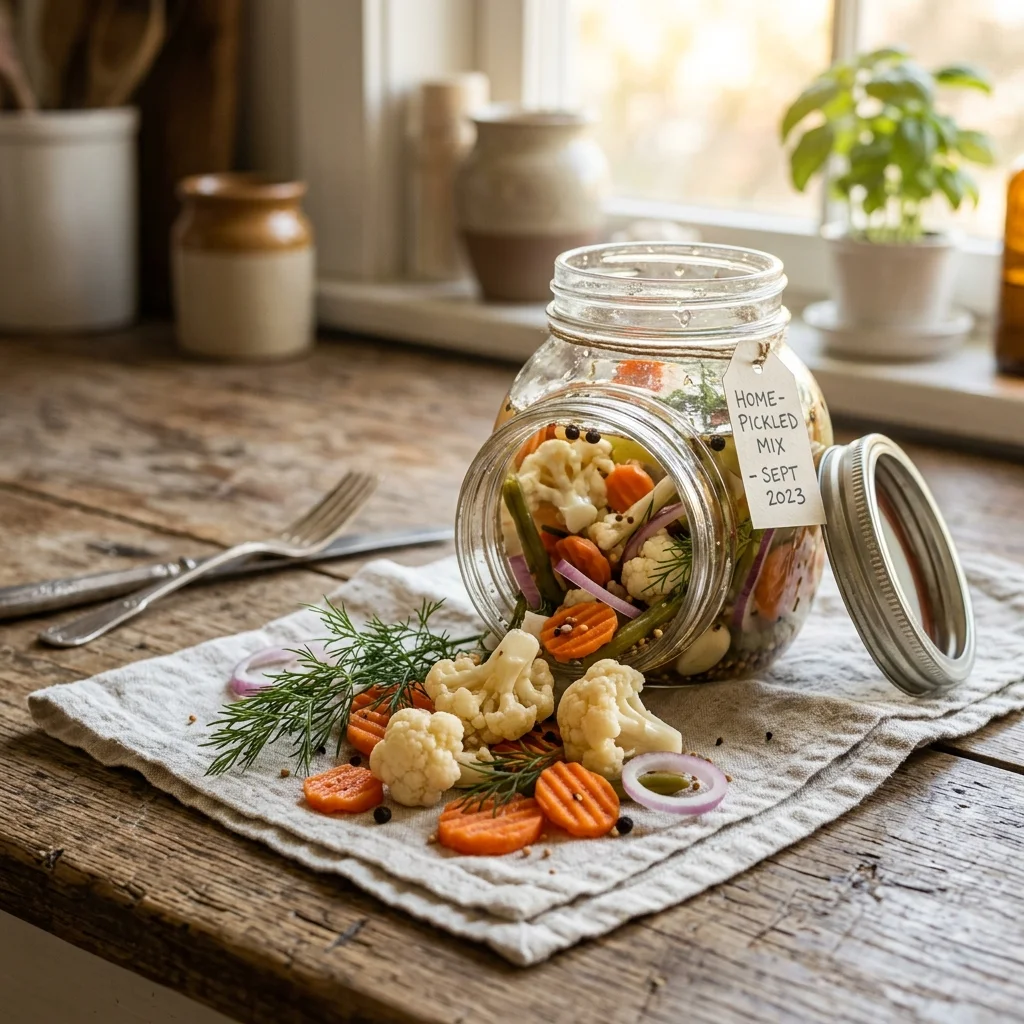
Nutrition Facts — per 100g
| Nutrient | Amount | % Daily Value |
|---|---|---|
| Calories | 18 kcal | 1% |
| Protein | 0.60g | 1% |
| Carbohydrates | 3.8g | 1% |
| Total Fat | 0.20g | 0% |
| Fiber | 1.2g | 4% |
| Sodium | 800.0mg | 35% |
Are Pickled Vegetables Good for You?
Yes, pickled vegetables are a nutritious, low-calorie addition to any diet. They provide 18 calories per 100g (1% DV), 1.2g of fiber (4% DV) for digestive health, and deliver a substantial 800mg of sodium (35% DV) from the pickling brine. Their minimal fat and protein content makes them ideal for adding volume to meals without excess calories.
Key Health Benefits of Pickled Vegetables
Low in calories for high volume — At just 18 kcal per 100g, they are an excellent choice for weight management, allowing you to eat satisfying portions without significant caloric impact.
Good source of dietary fiber — The 1.2g of fiber per 100g (4% DV) supports digestive health and helps maintain steady blood sugar levels throughout the day.
Virtually fat-free — With only 0.2g total fat per 100g, they are naturally lean and support heart-healthy eating patterns without contributing to excess dietary fat intake.
Minimal protein but low overall macros — While they provide just 0.6g of protein (1% DV), their light macronutrient profile makes them perfect side dishes or condiments that won’t overload your plate.
Contain beneficial probiotics — The fermentation process in many pickled vegetables creates live cultures that may support gut health and digestive function.
How Does Pickled Vegetables Compare?
Pickled vegetables are significantly lower in calories than raw vegetables preserved in oil-based preparations, making them a lighter alternative for adding flavor and nutrition. Unlike fresh vegetables, they are shelf-stable due to their acidic brine, though they do contain considerably more sodium (800mg per 100g) than their unpickled counterparts. This higher sodium content is the trade-off for their convenience and extended shelf life.
Frequently Asked Questions
How many calories are in pickled vegetables?
Pickled vegetables contain approximately 18 calories per 100g serving, making them one of the lowest-calorie vegetable options available. A typical serving of 1 cup (about 150g) would provide roughly 27 calories, allowing generous portions while maintaining a calorie deficit.
Are pickled vegetables good for weight loss?
Yes, pickled vegetables support weight loss efforts due to their minimal calorie content (18 kcal per 100g) and fiber content (1.2g per 100g). They allow you to eat satisfying portions while keeping calorie intake low, plus the vinegar in pickling may help with satiety and blood sugar control.
How much sodium is in pickled vegetables?
Pickled vegetables contain 800mg of sodium per 100g, which represents 35% of the daily recommended value. This high sodium content comes from the salt-based pickling brine used to preserve them, so those monitoring sodium intake should consume them in moderation.
Are pickled vegetables keto-friendly?
Yes, pickled vegetables are excellent for ketogenic diets, containing just 3.8g of carbohydrates per 100g (1% DV) with minimal protein or fat. Their low carb content and virtually zero net impact on blood sugar make them suitable for maintaining ketosis.
How should I store pickled vegetables?
Pickled vegetables should be stored in their brine in a cool, dark place or refrigerator, where they can last several months to over a year depending on the preservation method. Once opened, keep the container sealed and refrigerated to maintain freshness and prevent contamination.
How to Track Pickled Vegetables Nutrition with Gram
The Gram app makes logging pickled vegetables effortless—simply scan the jar with your phone’s camera using our AI food recognition, and the app instantly pulls complete nutritional data including sodium, fiber, and calories. You’ll get a full nutrient breakdown that helps you understand how pickled vegetables fit into your daily macros and micronutrient goals. Track multiple servings throughout your day and watch how they contribute to your overall nutrition profile in real time.
Frequently Asked Questions
How many calories are in pickled vegetables?
Pickled vegetables contain approximately 18 calories per 100g serving, making them one of the lowest-calorie vegetable options available. A typical serving of 1 cup (about 150g) would provide roughly 27 calories, allowing generous portions while maintaining a calorie deficit.
Are pickled vegetables good for weight loss?
Yes, pickled vegetables support weight loss efforts due to their minimal calorie content (18 kcal per 100g) and fiber content (1.2g per 100g). They allow you to eat satisfying portions while keeping calorie intake low, plus the vinegar in pickling may help with satiety and blood sugar control.
How much sodium is in pickled vegetables?
Pickled vegetables contain 800mg of sodium per 100g, which represents 35% of the daily recommended value. This high sodium content comes from the salt-based pickling brine used to preserve them, so those monitoring sodium intake should consume them in moderation.
Are pickled vegetables keto-friendly?
Yes, pickled vegetables are excellent for ketogenic diets, containing just 3.8g of carbohydrates per 100g (1% DV) with minimal protein or fat. Their low carb content and virtually zero net impact on blood sugar make them suitable for maintaining ketosis.
How should I store pickled vegetables?
Pickled vegetables should be stored in their brine in a cool, dark place or refrigerator, where they can last several months to over a year depending on the preservation method. Once opened, keep the container sealed and refrigerated to maintain freshness and prevent contamination.

Track your nutrition with Gram
Snap a photo of your meal and let AI do the rest. Track calories, macros, and micronutrients effortlessly.
Nutrition data sourced from USDA FoodData Central. Track pickled vegetables and thousands of other foods with the Gram app.