
Sinangag Nutrition Facts: Calories, Macros & Health Benefits
Summary: 100g of sinangag contains 174 calories, 3.2g protein, 31g carbs, and 3.9g fat. Sinangag is a good source of essential vitamins and minerals.
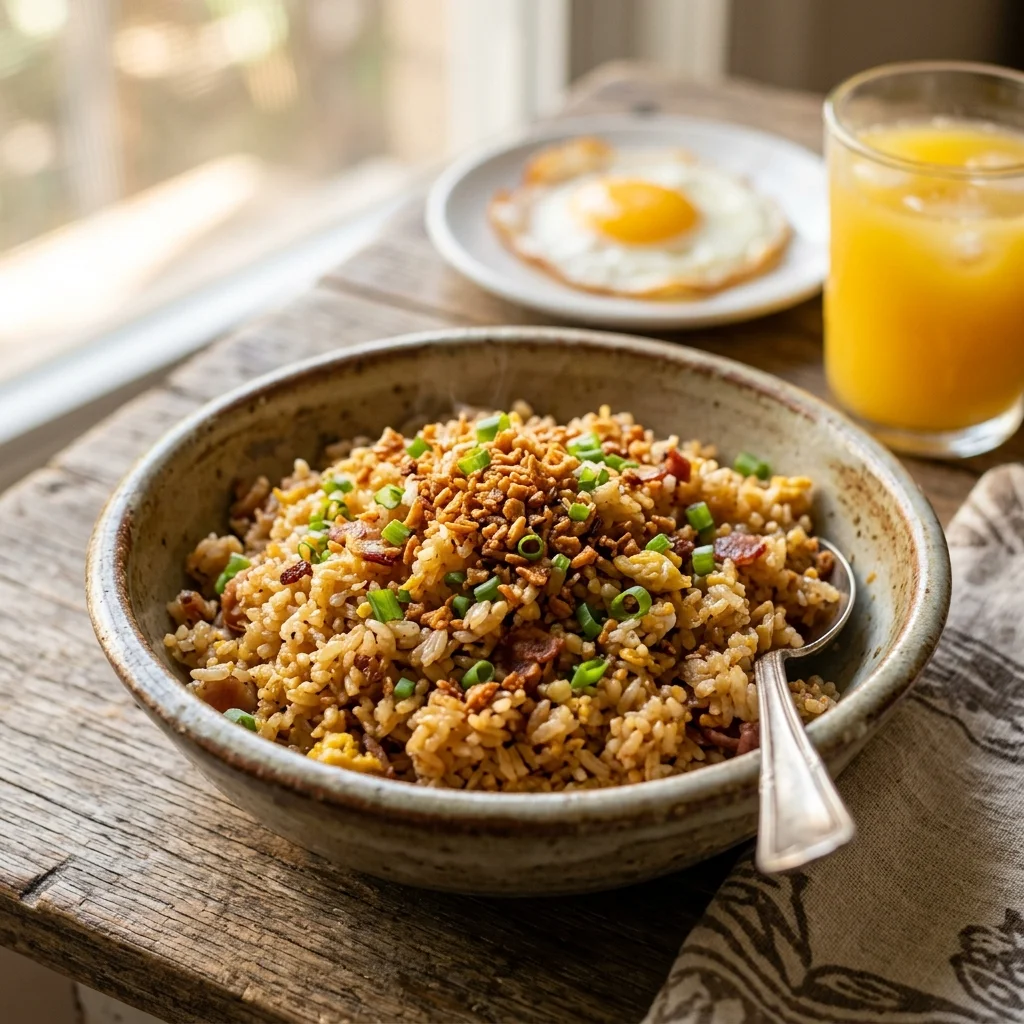
Nutrition Facts — per 100g
| Nutrient | Amount | % Daily Value |
|---|---|---|
| Calories | 174 kcal | 9% |
| Protein | 3.2g | 6% |
| Carbohydrates | 31.0g | 11% |
| Total Fat | 3.9g | 5% |
| Fiber | 0.50g | 2% |
| Sodium | 220.0mg | 10% |
Is Sinangag Good for You?
Yes, Sinangag is a reasonably healthy carbohydrate-based dish when consumed in moderation. Per 100g, it contains 31g of carbohydrates (11% Daily Value) for sustained energy, 3.2g of protein (6% Daily Value) for muscle support, and only 3.9g of total fat (5% Daily Value), making it a relatively low-fat option.
Key Health Benefits of Sinangag
Moderate Energy Source: With 174 calories per 100g (9% Daily Value), Sinangag provides a reasonable calorie boost for breakfast without excessive intake, making it suitable for portion-controlled meal planning.
Carbohydrate-Rich for Sustained Energy: The 31g of carbohydrates per 100g deliver quick and sustained glucose for morning activities, supporting cognitive function and physical performance throughout your day.
Low in Unhealthy Fats: At just 3.9g of total fat per 100g (5% Daily Value), it is a heart-conscious choice compared to many fried grain dishes, helping you maintain better cardiovascular health.
Modest Protein Contribution: The 3.2g of protein per serving supports muscle maintenance and satiety, though pairing it with eggs or meat enhances its protein profile significantly.
Sodium Content for Electrolyte Balance: Providing 220mg of sodium (10% Daily Value), Sinangag helps replenish electrolytes lost through perspiration, particularly valuable on warm mornings or after physical activity.
How Does Sinangag Compare?
Sinangag holds its own against plain white rice at 130 calories per 100g—it is slightly more calorie-dense due to its oil and garlic content, but compensates with superior flavor and satiety. Compared to fried rice dishes that often exceed 200 calories per 100g, it is a leaner preparation that doesn’t sacrifice taste.
Frequently Asked Questions
How many calories is in sinangag?
Sinangag contains 174 calories per 100g, or roughly 260–310 calories in a typical single-serving portion (150–180g), depending on how much oil is used during preparation.
Is sinangag good for weight loss?
Sinangag can fit into a weight loss plan when portion-controlled, as it is relatively low in fat and calories compared to other fried rice dishes. Pairing it with lean proteins and vegetables maximizes satiety while keeping total calorie intake manageable.
How much sodium does sinangag contain?
Sinangag contains 220mg of sodium per 100g, which is 10% of your Daily Value—a moderate amount that reflects both the salt added during cooking and any soy sauce or fish sauce used in traditional recipes.
Is sinangag suitable for a gluten-free diet?
Yes, Sinangag is naturally gluten-free when made with plain rice and garlic, though you should verify that any soy sauce or seasonings used are certified gluten-free, as some soy products contain wheat.
How should I store leftover sinangag?
Store leftover Sinangag in an airtight container in the refrigerator for up to 3–4 days, or freeze it for up to 2 months. Reheat gently in a pan with a small amount of oil to restore its texture and flavor.
How to Track Sinangag Nutrition with Gram
The Gram app makes logging Sinangag effortless—simply snap a photo of your plate and let our AI food scanner identify the portion size and calculate exact macronutrients in seconds. You’ll instantly see the full nutrient breakdown, from calories and carbs to sodium and fiber, helping you stay aligned with your daily nutrition goals without manual data entry.
Frequently Asked Questions
How many calories is in sinangag?
Sinangag contains 174 calories per 100g, or roughly 260–310 calories in a typical single-serving portion (150–180g), depending on how much oil is used during preparation.
Is sinangag good for weight loss?
Sinangag can fit into a weight loss plan when portion-controlled, as it is relatively low in fat and calories compared to other fried rice dishes. Pairing it with lean proteins and vegetables maximizes satiety while keeping total calorie intake manageable.
How much sodium does sinangag contain?
Sinangag contains 220mg of sodium per 100g, which is 10% of your Daily Value—a moderate amount that reflects both the salt added during cooking and any soy sauce or fish sauce used in traditional recipes.
Is sinangag suitable for a gluten-free diet?
Yes, Sinangag is naturally gluten-free when made with plain rice and garlic, though you should verify that any soy sauce or seasonings used are certified gluten-free, as some soy products contain wheat.
How should I store leftover sinangag?
Store leftover Sinangag in an airtight container in the refrigerator for up to 3–4 days, or freeze it for up to 2 months. Reheat gently in a pan with a small amount of oil to restore its texture and flavor.

Track your nutrition with Gram
Snap a photo of your meal and let AI do the rest. Track calories, macros, and micronutrients effortlessly.
Nutrition data sourced from USDA FoodData Central. Track sinangag and thousands of other foods with the Gram app.